
Beyond Boundaries: The Power of Solution-Led Design in Healthcare
Beyond Boundaries: The Power of Solution-Led Design in Healthcare
May 6, 2026 │ By Jennifer McElroy
May 6, 2026 │ By Jennifer McElroy

Hospitals are constantly evolving, but meaningful innovation often comes not from building something new—it comes from transforming what already exists. At South Shore University Hospital, Northwell Health faced exactly this challenge: expanding patient rooms, surgical suites, and critical care spaces within an addition that had to align with the constraints of the adjacent 1970s structure. Existing floor-to-floor heights, as low as 10’-7”, had to be maintained, requiring careful coordination of structure, systems, and clinical needs. At the same time, the project needed to accommodate the demands of a hurricane zone, seismic zone, and floodplain—each adding layers of complexity without room for compromise in patient experience. The question was not just what could be built, but how it could be built within these limitations. At the height of COVID, the urgency to deliver these critical spaces only intensified, compressing timelines and amplifying the need for thoughtful, efficient solutions.
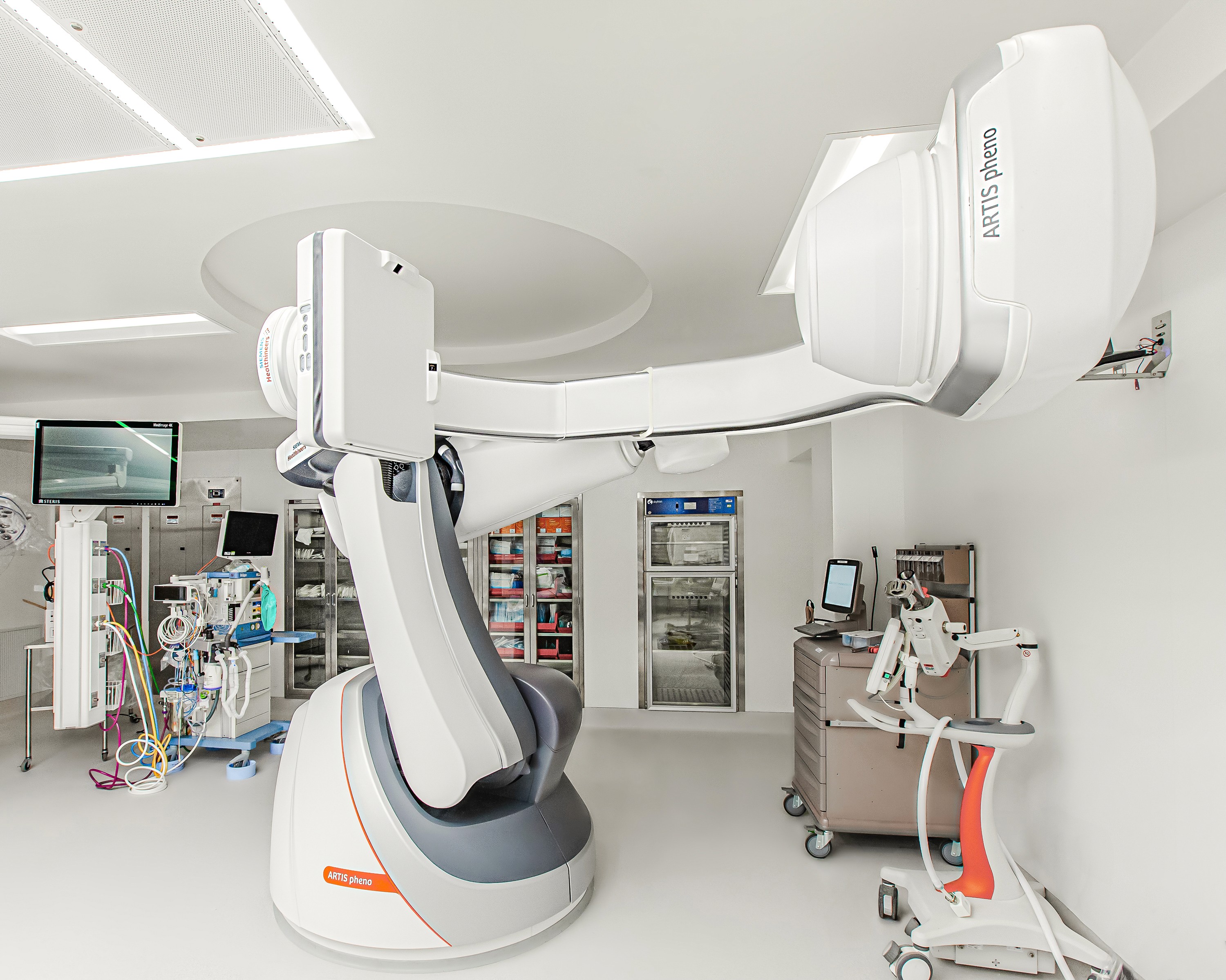
We approached the project with a solution-led mindset, viewing every constraint as an opportunity to rethink how care could be delivered. From the outset, it was clear that every square foot mattered, with both critical vertical and horizontal limitations shaping the design. Within the 10’-7” slab-to-slab height, the hybrid operating rooms needed to accommodate advanced imaging systems in a space built long before such technology existed. Every component—from surgical booms to imaging tables—was carefully evaluated and selected to maximize functionality while respecting tight spatial limits.
Hospitals are constantly evolving, but meaningful innovation often comes not from building something new—it comes from transforming what already exists. At South Shore University Hospital, Northwell Health faced exactly this challenge: expanding patient rooms, surgical suites, and critical care spaces within an addition that had to align with the constraints of the adjacent 1970s structure. Existing floor-to-floor heights, as low as 10’-7”, had to be maintained, requiring careful coordination of structure, systems, and clinical needs. At the same time, the project needed to accommodate the demands of a hurricane zone, seismic zone, and floodplain—each adding layers of complexity without room for compromise in patient experience. The question was not just what could be built, but how it could be built within these limitations. At the height of COVID, the urgency to deliver these critical spaces only intensified, compressing timelines and amplifying the need for thoughtful, efficient solutions.
We approached the project with a solution-led mindset, viewing every constraint as an opportunity to rethink how care could be delivered. From the outset, it was clear that every square foot mattered, with both critical vertical and horizontal limitations shaping the design. Within the 10’-7” slab-to-slab height, the hybrid operating rooms needed to accommodate advanced imaging systems in a space built long before such technology existed. Every component—from surgical booms to imaging tables—was carefully evaluated and selected to maximize functionality while respecting tight spatial limits.
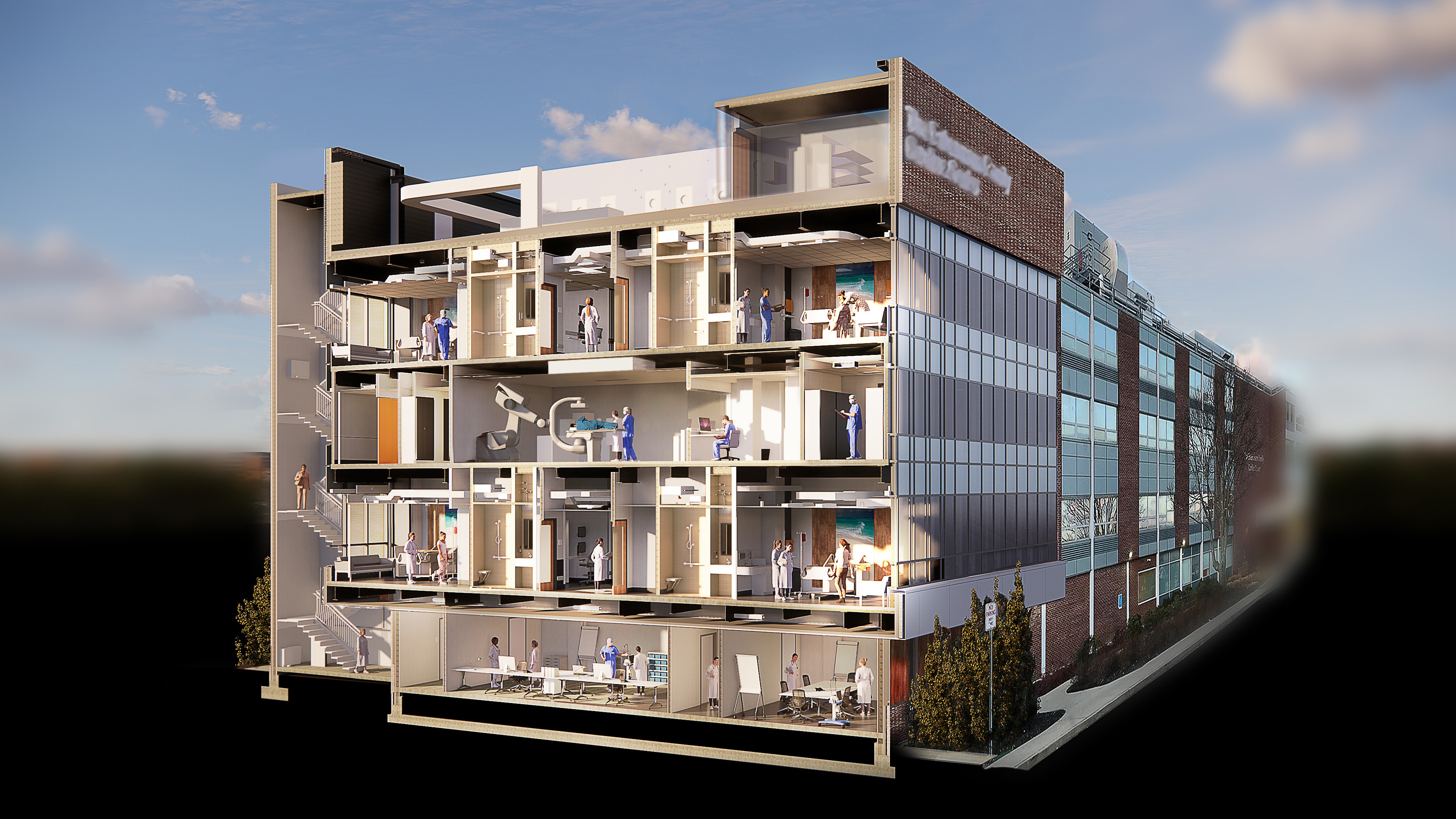
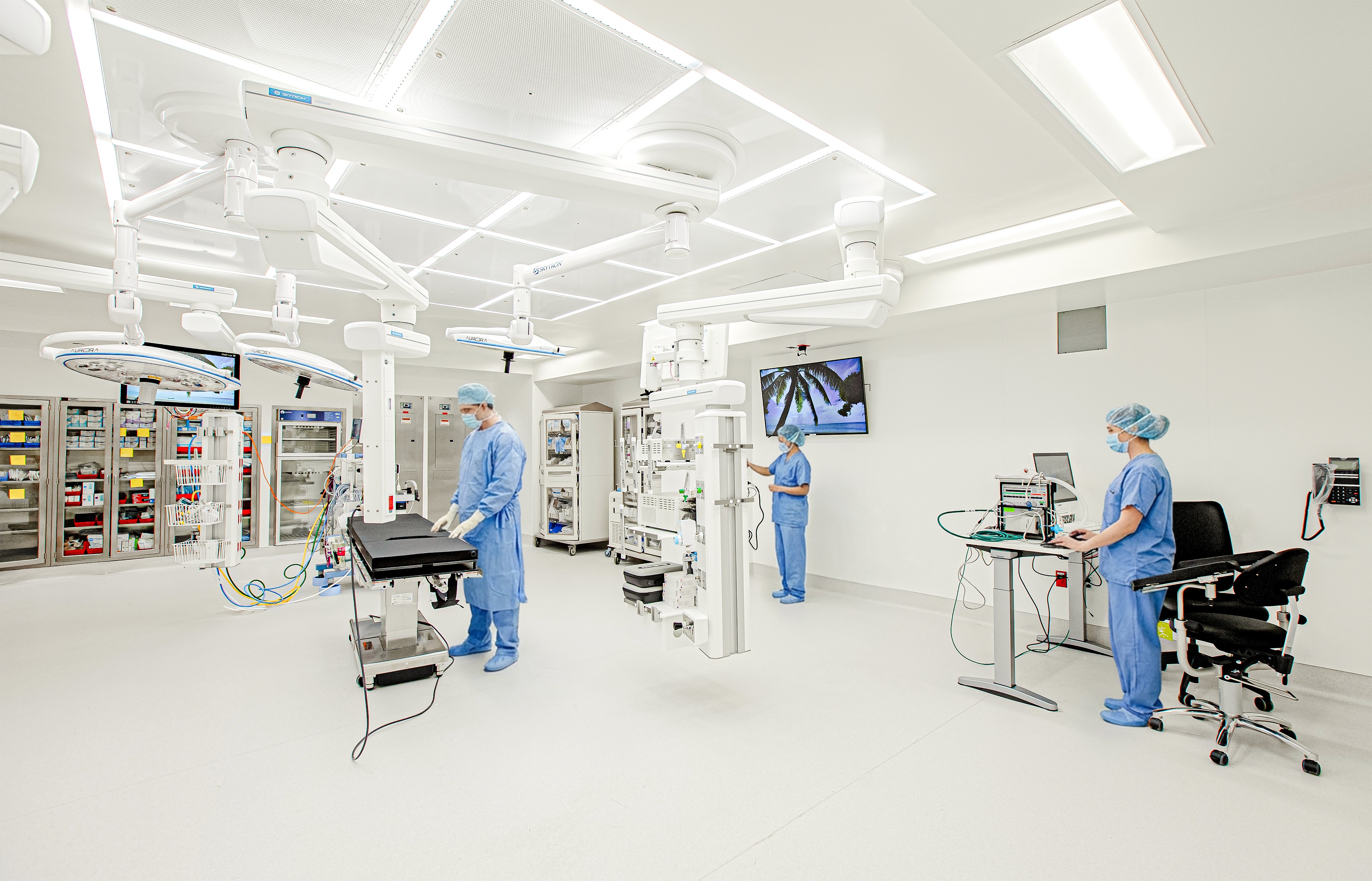
To meet these needs within the vertical constraints, the project required innovative engineering solutions. In the Hybrid OR, a structural modular laminar airflow system was paired with additional supports that allowed the overhead slab to be suspended, creating the necessary ceiling height for modern surgical technologies. At the same time, the pressures of COVID highlighted the urgent need for additional patient capacity. To address horizontal constraints, the design incorporated med-surge rooms positioned between the end of the existing wing and the adjacent emergency generator. This layout not only ensured an optimal patient experience under normal conditions but also allowed the space to accommodate twice the patients during emergencies. These combined solutions were critical to meeting both immediate demands and long-term care needs.
To meet these needs within the vertical constraints, the project required innovative engineering solutions. In the Hybrid OR, a structural modular laminar airflow system was paired with additional supports that allowed the overhead slab to be suspended, creating the necessary ceiling height for modern surgical technologies. At the same time, the pressures of COVID highlighted the urgent need for additional patient capacity. To address horizontal constraints, the design incorporated med-surge rooms positioned between the end of the existing wing and the adjacent emergency generator. This layout not only ensured an optimal patient experience under normal conditions but also allowed the space to accommodate twice the patients during emergencies. These combined solutions were critical to meeting both immediate demands and long-term care needs.
For the hybrid operating rooms in particular, BIM technology became a key guide throughout the process. Beginning with a Level 300 model during design, we worked closely with the contractor and their BIM consultant to advance the model to Level 400, ensuring that all trades could be coordinated within the constrained ceiling space. This approach allowed us to understand limitations early and align architectural, structural, and mechanical systems before constructed. In an active hospital, there was no room for error—each decision had to maintain patient safety, minimize disruption to adjacent operational spaces, and satisfy stringent regulatory requirements.
While BIM has fundamentally changed the way we design, it is important that the software remains a tool rather than a constraint. The goal is to use modeling to achieve the design intent—not to let familiarity with the software limit what is possible. Establishing the appropriate level of model detail early in the project, and clearly defining expectations in contracts, becomes essential. Designing within such tight tolerances also requires balancing innovation with constructability—pushing the envelope while remaining mindful of real-world construction tolerances, particularly when working close to code minimums where even small deviations can have significant impacts.
For the hybrid operating rooms in particular, BIM technology became a key guide throughout the process. Beginning with a Level 300 model during design, we worked closely with the contractor and their BIM consultant to advance the model to Level 400, ensuring that all trades could be coordinated within the constrained ceiling space. This approach allowed us to understand limitations early and align architectural, structural, and mechanical systems before constructed. In an active hospital, there was no room for error—each decision had to maintain patient safety, minimize disruption to adjacent operational spaces, and satisfy stringent regulatory requirements.
While BIM has fundamentally changed the way we design, it is important that the software remains a tool rather than a constraint. The goal is to use modeling to achieve the design intent—not to let familiarity with the software limit what is possible. Establishing the appropriate level of model detail early in the project, and clearly defining expectations in contracts, becomes essential. Designing within such tight tolerances also requires balancing innovation with constructability—pushing the envelope while remaining mindful of real-world construction tolerances, particularly when working close to code minimums where even small deviations can have significant impacts.
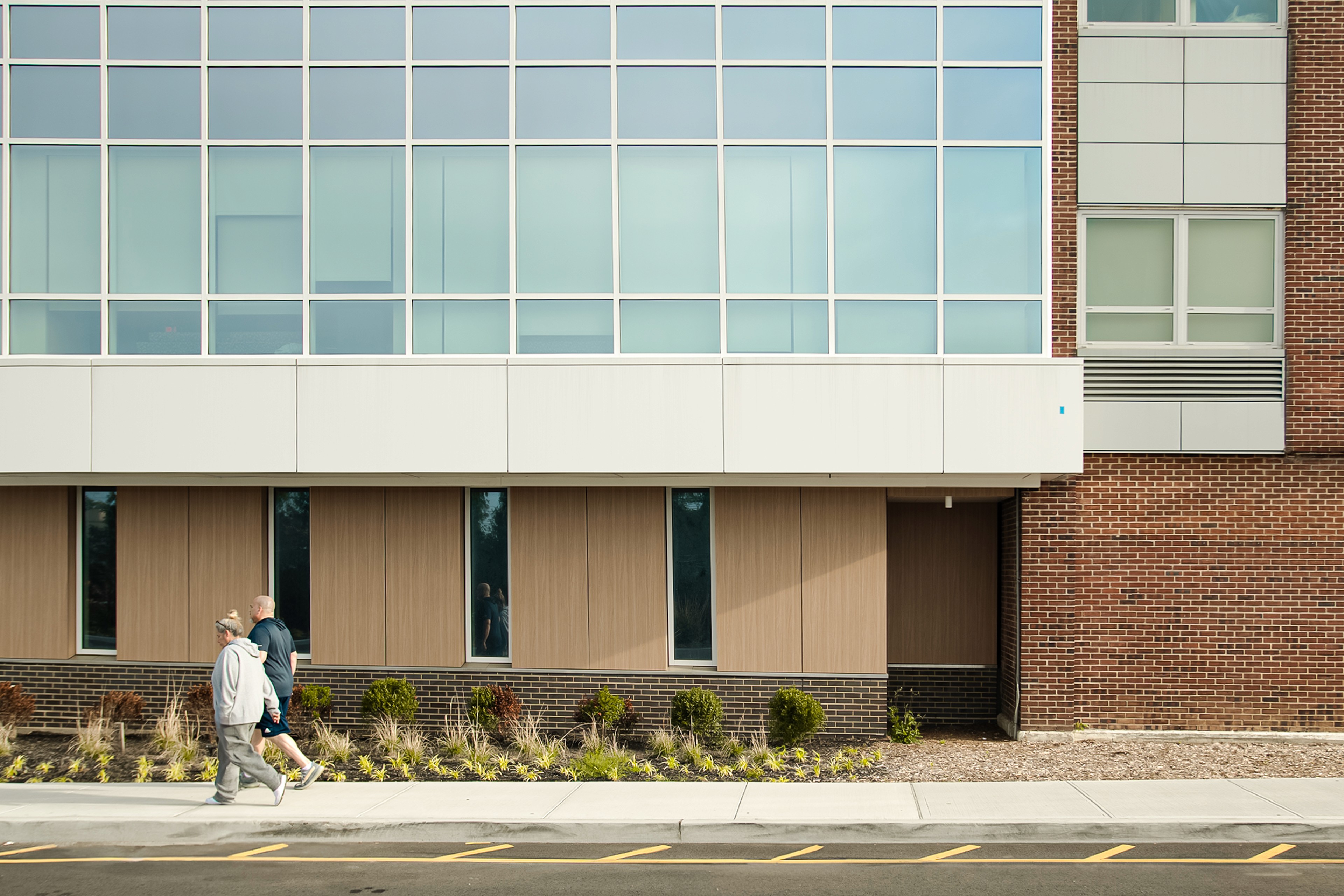
Beyond technology, patient experience guided every design decision. Light-filled patient rooms, enhanced with natural tones, patterns, and local artwork, create a welcoming and healing environment. Patient-centered design principles were integrated into every aspect of the layout to support comfort, privacy, and improved clinical outcomes. By carefully considering how spaces influence care, the design fosters an environment that not only meets medical needs but also enhances the overall well-being of patients throughout their stay.
Beyond technology, patient experience guided every design decision. Light-filled patient rooms, enhanced with natural tones, patterns, and local artwork, create a welcoming and healing environment. Patient-centered design principles were integrated into every aspect of the layout to support comfort, privacy, and improved clinical outcomes. By carefully considering how spaces influence care, the design fosters an environment that not only meets medical needs but also enhances the overall well-being of patients throughout their stay.
Equally important was designing for staff efficiency and workflow. We collaborated directly with doctors, nurses, and other clinical personnel to determine the most effective layouts for both routine operations and emergency situations. Strategic placement of storage, clean supply rooms, and control spaces for the hybrid operating rooms allows clinicians to focus on patient care rather than logistics. Even floor patterns were carefully planned, aligned with table orientations for different procedures in multi-modality rooms, optimizing movement and workflow. These thoughtful design solutions streamline daily tasks, minimize unnecessary steps, and enable staff to operate efficiently in a complex, high-pressure environment.
Equally important was designing for staff efficiency and workflow. We collaborated directly with doctors, nurses, and other clinical personnel to determine the most effective layouts for both routine operations and emergency situations. Strategic placement of storage, clean supply rooms, and control spaces for the hybrid operating rooms allows clinicians to focus on patient care rather than logistics. Even floor patterns were carefully planned, aligned with table orientations for different procedures in multi-modality rooms, optimizing movement and workflow. These thoughtful design solutions streamline daily tasks, minimize unnecessary steps, and enable staff to operate efficiently in a complex, high-pressure environment.
The resulting four-story, 12,000-square-foot addition is more than just extra space. It provides hybrid operating rooms, expanded inpatient units, and shell space for future growth. Each floor serves a distinct purpose, supporting both current healthcare demands and emerging technologies. The addition demonstrates that when design is guided by people, technology, and creativity, constraints are not limitations—they are opportunities. Every room, corridor, and detail contributes to better patient outcomes, enhanced staff efficiency, and a stronger sense of community; aligning with Northwell’s shift of Southside from a community hospital to a tertiary academic and teaching center.
The resulting four-story, 12,000-square-foot addition is more than just extra space. It provides hybrid operating rooms, expanded inpatient units, and shell space for future growth. Each floor serves a distinct purpose, supporting both current healthcare demands and emerging technologies. The addition demonstrates that when design is guided by people, technology, and creativity, constraints are not limitations—they are opportunities. Every room, corridor, and detail contributes to better patient outcomes, enhanced staff efficiency, and a stronger sense of community; aligning with Northwell’s shift of Southside from a community hospital to a tertiary academic and teaching center.
